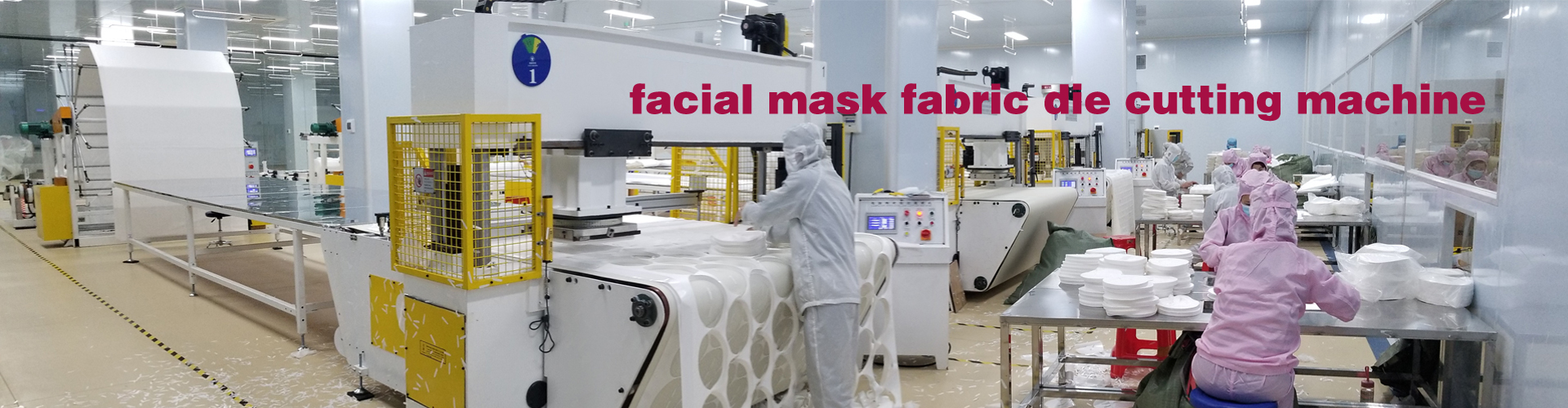
Will Die Cutting Machines Be Replaced by Vibration Knife Cutters?
In recent years, vibration knife cutting machines have swept the market with advantages like "no mold required" and "high precision," leaving many business owners still using traditional die cutting press machines wondering: Is it time to retire my old equipment?
But that's not exactly how it works. After analyzing frontline feedback and technical specifications, the conclusion is clear: **it's not about one replacing the other, but rather a strategic choice between "mass production" and "small-batch customization."
If your factory is facing equipment upgrade decisions, read through these five core dimensions of the comparison before deciding where to invest.
Die Cutting Machine:Lower equipment cost, one-time mold investment. The larger the production volume, the lower the unit cost. Ideal for mass production.
Vibration Knife:No mold required, but blade wear is a continuous cost—the more you cut, the more you spend on consumables.
Conclusion:Choose die cutting for mass production; choose vibration knife for small-batch, customized orders.
II. Power & Performance: 300-Ton Stamping Force vs. High-Frequency Vibration
Die Cutting Machine:Hydraulic stamping force can reach up to 300 tons. Thick rubber, multi-layer leather, and rigid cardboard are formed in one clean stamp, crisp and precise.
Vibration Knife:Relies on high-frequency vibration to "slice" through materials. When cutting thick EVA foam, it leaves indentation marks at the starting point, produces tapered holes (with diameter deviation between top and bottom), and the blade tends to break from heat generated by high-speed friction. It also risks damaging extremely thin materials.
Conclusion:For thick, hard, or multi-layer materials, the traditional die cutting machine is irreplaceable.
III. Efficiency Showdown: 70 Strokes Per Minute vs. Piece-by-Piece Cutting
Die Cutting Machine: With automated feeding systems, stamping speed can reach 20-70 strokes per minute**. Ideal for high-speed, continuous production of standardized products.
Vibration Knife:Its strength lies in flexible changeover. However, when continuously producing the same product, its speed cannot match the stamping mode due to limitations from toolpath complexity and material characteristics.
Conclusion: Choose die cutting for maximum throughput; choose vibration knife for flexible production changeovers.
IV. Stability & Maintenance
Die Cutting Machine:Mature, simple mechanical or hydraulic structure with extremely low failure rate. Easy to repair, parts are readily available, and it doesn't require highly skilled maintenance technicians.
Vibration Knife:Three major concerns—first, core components (vibration motor, eccentric shaft) are expensive to repair when worn or overheated; second, vacuum suction system failures (clogged filters or air leaks) can cause material shifting ("runaway"); third, parameter adjustments require experienced operators—wrong settings lead to scrapped material.
Conclusion:For stability and peace of mind, the traditional die cutting machine is more reliable.
Final Recommendation: How to Choose?
After reviewing these data comparisons, the decision becomes clear: choose your equipment based on your order structure.
If your orders are:single-variety, ultra-mass production, thick/hard materials → Stick with the die cutting machine.It's your "cash printer." Don't replace it blindly, or you'll fall into the trap of "high investment, high consumable costs, low output."
If your orders are:small-batch, multi-variety, frequent sampling, short lead times → Introduce a vibration knife cutter.It's your "rapid response team" for customized orders.
Best strategy: Combine both. Use the die cutting machine for high-volume standard orders, and the vibration knife for personalized small-batch jobs. Together, they form the optimal solution for factories to adapt to the future market.
But that's not exactly how it works. After analyzing frontline feedback and technical specifications, the conclusion is clear: **it's not about one replacing the other, but rather a strategic choice between "mass production" and "small-batch customization."
If your factory is facing equipment upgrade decisions, read through these five core dimensions of the comparison before deciding where to invest.
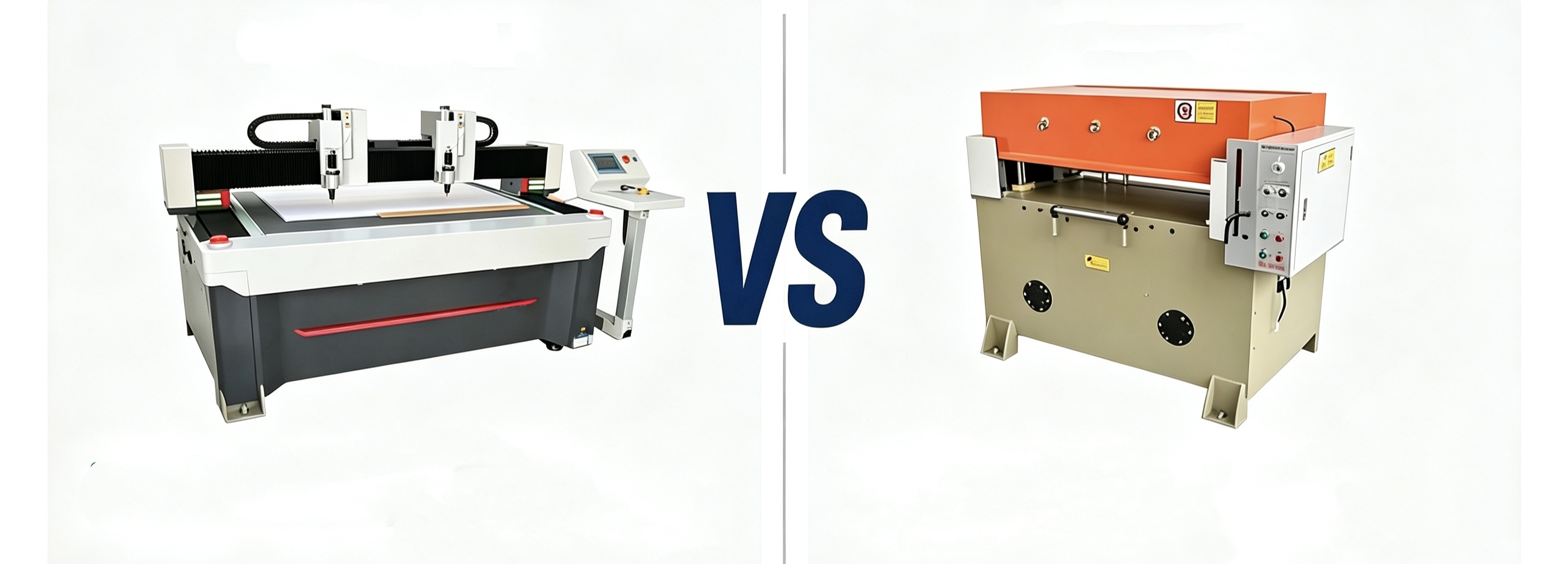
I. Cost Analysis: Ongoing Blade Wear vs. One-Time Mold Investment
Many business owners hesitate because they only look at the purchase price, overlooking the structural differences in production costs.Die Cutting Machine:Lower equipment cost, one-time mold investment. The larger the production volume, the lower the unit cost. Ideal for mass production.
Vibration Knife:No mold required, but blade wear is a continuous cost—the more you cut, the more you spend on consumables.
Conclusion:Choose die cutting for mass production; choose vibration knife for small-batch, customized orders.
II. Power & Performance: 300-Ton Stamping Force vs. High-Frequency Vibration
Die Cutting Machine:Hydraulic stamping force can reach up to 300 tons. Thick rubber, multi-layer leather, and rigid cardboard are formed in one clean stamp, crisp and precise.
Vibration Knife:Relies on high-frequency vibration to "slice" through materials. When cutting thick EVA foam, it leaves indentation marks at the starting point, produces tapered holes (with diameter deviation between top and bottom), and the blade tends to break from heat generated by high-speed friction. It also risks damaging extremely thin materials.
Conclusion:For thick, hard, or multi-layer materials, the traditional die cutting machine is irreplaceable.
III. Efficiency Showdown: 70 Strokes Per Minute vs. Piece-by-Piece Cutting
Die Cutting Machine: With automated feeding systems, stamping speed can reach 20-70 strokes per minute**. Ideal for high-speed, continuous production of standardized products.
Vibration Knife:Its strength lies in flexible changeover. However, when continuously producing the same product, its speed cannot match the stamping mode due to limitations from toolpath complexity and material characteristics.
Conclusion: Choose die cutting for maximum throughput; choose vibration knife for flexible production changeovers.
IV. Stability & Maintenance
Die Cutting Machine:Mature, simple mechanical or hydraulic structure with extremely low failure rate. Easy to repair, parts are readily available, and it doesn't require highly skilled maintenance technicians.
Vibration Knife:Three major concerns—first, core components (vibration motor, eccentric shaft) are expensive to repair when worn or overheated; second, vacuum suction system failures (clogged filters or air leaks) can cause material shifting ("runaway"); third, parameter adjustments require experienced operators—wrong settings lead to scrapped material.
Conclusion:For stability and peace of mind, the traditional die cutting machine is more reliable.
Final Recommendation: How to Choose?
After reviewing these data comparisons, the decision becomes clear: choose your equipment based on your order structure.
If your orders are:single-variety, ultra-mass production, thick/hard materials → Stick with the die cutting machine.It's your "cash printer." Don't replace it blindly, or you'll fall into the trap of "high investment, high consumable costs, low output."
If your orders are:small-batch, multi-variety, frequent sampling, short lead times → Introduce a vibration knife cutter.It's your "rapid response team" for customized orders.
Best strategy: Combine both. Use the die cutting machine for high-volume standard orders, and the vibration knife for personalized small-batch jobs. Together, they form the optimal solution for factories to adapt to the future market.