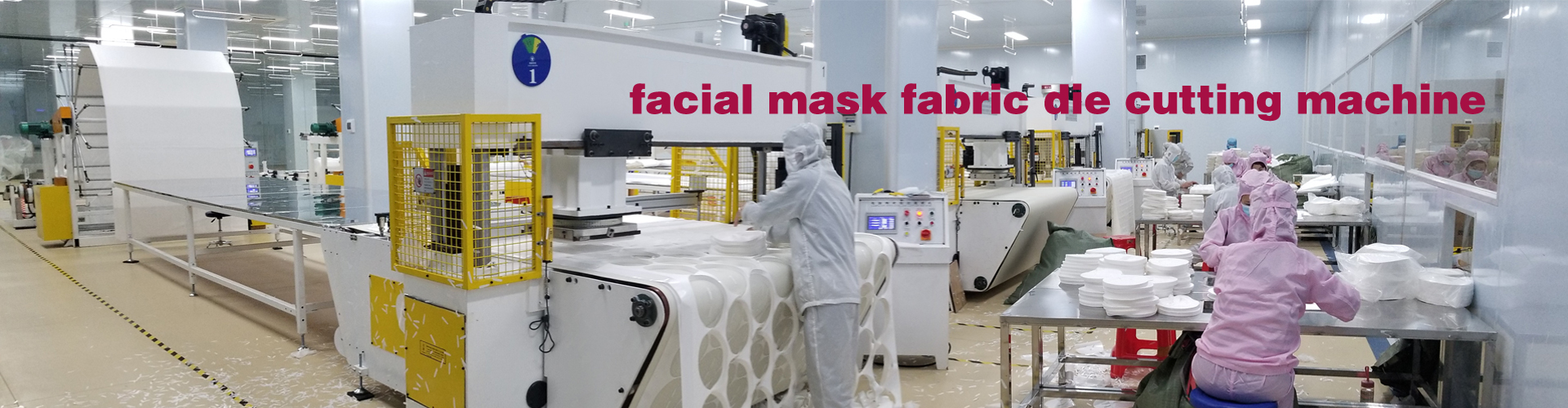
How to choose tonnage for a die cutting press machine — 40T vs 60T vs 80T?
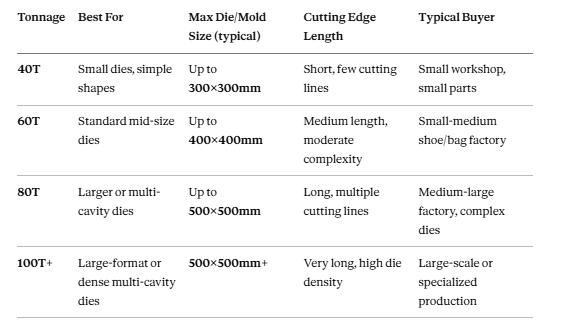
Tonnage is determined by die/mold cutting size — the larger the die and the longer its total cutting edge length, the more force required. 40T suits small dies, 60T covers standard mid-size dies, and 80T handles large or multi-cavity dies.
Five Key Selection Factors
1. Total Cutting Edge Length The longer the combined cutting edge length on a die, the more tonnage is needed. This is the single biggest driver of force requirement, more than material alone.
2. Overall Die Footprint A die with a larger outer dimension (e.g. 400×400mm vs 300×300mm) spreads cutting force across a wider area, requiring higher tonnage to maintain even pressure.
3. Number of Cavities in One Die A multi-cavity die — cutting several shapes in a single stroke — effectively multiplies total cutting edge length, pushing tonnage requirement up even if each cavity is small.
4. Die Complexity & Shape Density Dies with intricate shapes, sharp corners, or dense cutting lines concentrate more edge length into the same footprint, increasing the force needed versus a simple outline.
5. Future Die Size Scaling If future orders may require larger or more complex dies, choosing one tonnage tier above current need avoids replacing the machine when die size grows.
Tonnage Comparison Table
FAQ — 6 Questions & Answers
Q1: What happens if die cutting size exceeds the machine's tonnage rating? The press may fail to cut through fully along parts of the die, or strain the hydraulic system under repeated overload, accelerating wear.
Q2: Is a higher tonnage always the safer choice for a given die size? Not necessarily. Over-specifying tonnage for a small, simple die raises upfront cost and energy use without any gain in cut quality.
Q3: Can one machine handle both small and large dies? Yes, as long as tonnage is sized for the largest die footprint and edge length you plan to use — smaller dies run without issue on the same machine.
Q4: Does material type matter if die size is the main factor? Material still plays a role, but for a given die, cutting edge length and footprint set the baseline tonnage — material hardness then fine-tunes the final selection.
Q5: Should tonnage selection differ for double-table vs single-table machines? Table configuration doesn't change tonnage requirement directly — it's still set by die size and cutting edge length, though double-table setups often pair with higher tonnage for output.
Q6: How can I confirm the right tonnage for my specific die? Send your die dimensions, cavity count, and cutting edge layout to the supplier's technical team for a configuration-matched tonnage recommendation.