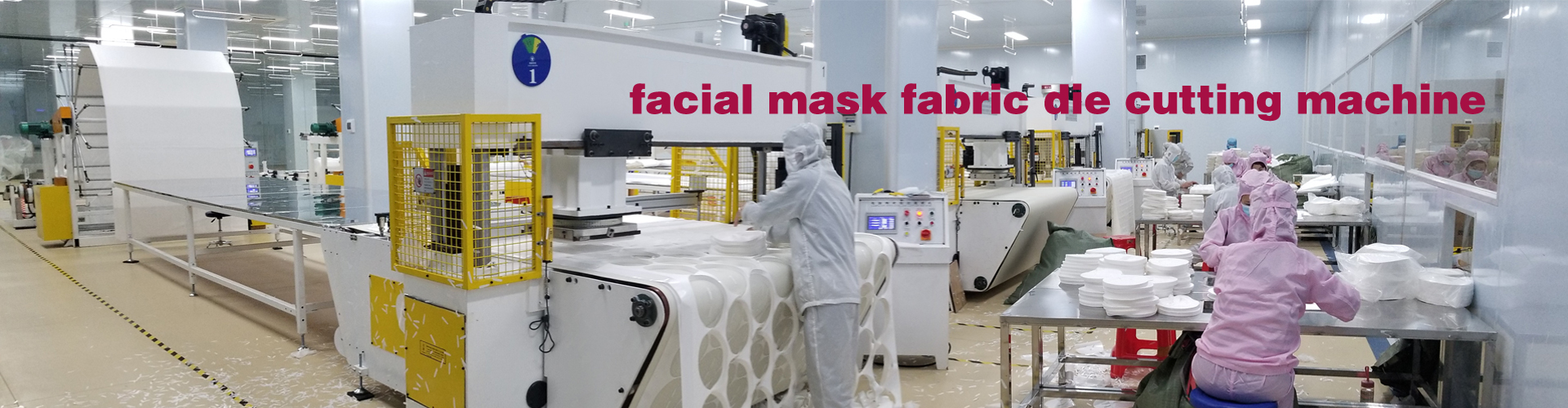
What is the purpose of adding an automatic feeding system to a die cutting press machine?
The feeding system is the core module of a die cutting press machine and the foundation for high-efficiency production, stable quality and safe operation. The whole machine consists of three major functional modules: feeding system, cutting system and discharging system. A well-matched feeding system can maximize productivity, ensure operator safety and optimize labor and material costs. We provide a full range of graded feeding solutions from manual, semi-automatic to high-speed fully automatic types to meet diverse material, process, capacity and budget requirements.
An automatic feeding system is the efficiency core of a die cutting press. It boosts output by 30%-80%, improves material utilization, and lets one operator manage 2-4 machines — a key upgrade for shoe, bag, and automotive interior mass production.
Five Core Advantages
1. Higher Production Efficiency Eliminates manual spreading, pulling, and aligning between cycles. Continuous cutting with no idle time boosts overall capacity by 30%-80%, especially valuable for large orders.
2. Stable Cutting Accuracy Servo/stepper motor precision feeding keeps errors minimal, prevents skewing and deviation, and significantly improves material utilization — lowering overall production cost.
3. Lower Labor Cost Traditional feeding needs one worker per machine. With auto feeding, one operator can supervise 2-4 machines, easing labor shortages and high turnover.
4. Consistent Product Quality Uniform feeding tension avoids stretching and wrinkling. Thin and thick materials cut to consistent size, meeting the quality bar for bulk shoe and bag orders.
5. Improved Safety Reduces repetitive manual hand movements near the cutting die. Combined with safety guards and light curtains, it substantially lowers crushing and cutting injury risks.
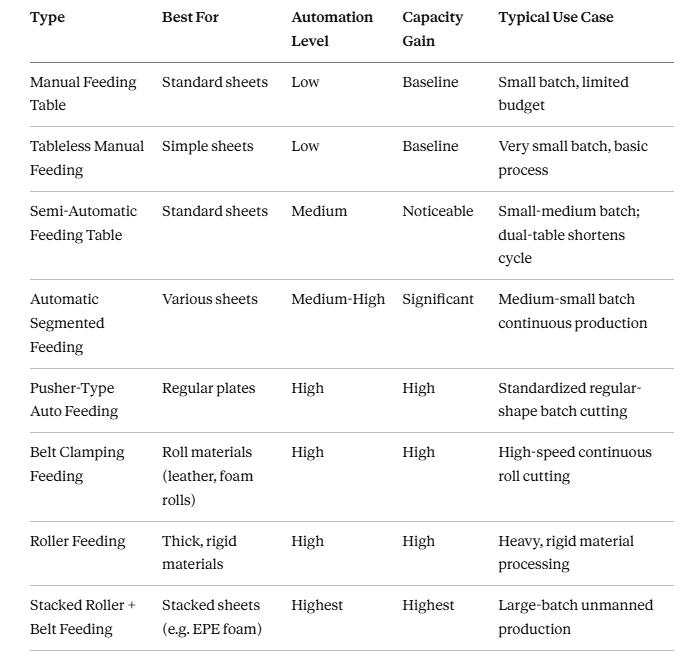
Feeding System Comparison Table
FAQ — 6 Questions & Answers
Q1: How much can an automatic feeding system boost capacity? Depending on material and process, output can increase by 30%-80%. Paired with a full-automatic machine, one operator can run multiple units at once.
Q2: Does auto feeding require extra labor? No. Traditional cutting needs one worker per machine; after upgrading, one operator handles 2-4 machines, actually cutting labor cost.
Q3: Can roll materials like leather or foam rolls be cut directly? Yes. Belt clamping feeding supports continuous full-roll processing, eliminating pre-cutting into sheets and simplifying pre-production prep.
Q4: Does auto feeding increase safety risk? The opposite — it reduces manual hand movement in the cutting zone, and combined with light curtains, significantly lowers crushing and scratching risks.
Q5: Is auto feeding worth it for small-batch orders? Not always full-auto. A semi-automatic or segmented feeding table often offers better ROI for flexible small-medium batch production.
Q6: How do I choose the right feeding solution? Evaluate material hardness/thickness, order volume, capacity needs, and budget together — our technical team can provide a one-on-one selection recommendation.